The Decline of Traditional Cigarettes: Russians Switch to E-Cigarettes

Aug.29.2023
The Decline of Traditional Cigarettes: Russians Switch to E-Cigarettes
Russian cigarette sales drop as smokers shift to e-cigarettes and heated tobacco products, according to Rosstat data.

According to data released by the Russian Federal State Statistics Service (Rosstat) on August 28th, the sales volume of regular cigarettes in Russia is declining as smokers are shifting from traditional cigarettes to e-cigarettes and heated tobacco products.


According to the data, the per capita retail sales volume of various types of cigarettes in Saint Petersburg, Russia, showed an average year-on-year decline of 47% from January to June 2023. In the same period last year, from January to June 2022, the average number of cigarettes sold per person per month in Saint Petersburg was 133, while currently it is only 70. Comparing to the results from the first six months of last year, Saint Petersburg sold an average of 70 cigarettes per person per month.


The decrease in cigarette sales in some major cities may be attributed to the growing popularity of new products, including e-cigarettes and heated tobacco products.


Polina Vilichkina, leader of the big data company "Evotor," points out that the decline in regular cigarette sales is a trend in Russia in recent years. However, this does not mean that people are quitting smoking but rather that smokers are shifting from traditional cigarettes to e-cigarettes.


According to Vilichkina, the younger generation is increasingly turning to e-cigarettes rather than traditional cigarettes when they start smoking.


Furthermore, the growth rate of e-cigarette sales is higher than the decline rate of traditional cigarettes.


At the same time, the sales of smokeless nicotine products are also increasing. It is estimated that the number of stores selling Swedish snus has doubled in the past year. Despite Russia banning the sale of Swedish snus since 2015, smokeless nicotine mixtures are not legally restricted at the federal level. However, authorities in some regions, such as the Arkhangelsk Oblast, do not allow the sale of such products.


Experts believe that the unusual nature of sales data in Saint Petersburg may be attributed to a miscalculation in the statistical methods used by the Russian Federal State Statistics Service.


However, experts believe that the decline in official sales might also be genuine, as the data from the National Statistics Bureau is based on tax revenues and does not account for counterfeit products. Given the decrease in people's income, many individuals have started saving money and turned to purchasing goods from the grey market.


According to experts' estimates, there are numerous websites on the internet that offer opportunities to purchase cigarettes at significantly lower prices than the official rates. However, analyst Ivan Fegekov claims that all products sold on these websites are counterfeit.


Disclaimer

This article is provided solely for professional research, industry discussion, and informational purposes. Any references to brands, companies, products, technologies, or policies are made for factual reporting and analytical purposes only, and do not constitute endorsement, recommendation, promotion, or advertising by 2Firsts.

Nicotine-containing products, including but not limited to cigarettes, e-cigarettes, heated tobacco products, and nicotine pouches, carry significant health risks. Readers are responsible for complying with all applicable laws and regulations in their respective jurisdictions, including age restrictions and access limitations.

The information contained in this article should not be regarded as investment, legal, medical, regulatory, or commercial advice. While 2Firsts strives to ensure the accuracy and reliability of its content, it does not assume liability for any direct or indirect loss arising from errors, omissions, inaccuracies, or reliance on the information contained herein.

This article is not intended for individuals below the legal age for accessing tobacco or nicotine-related information in their jurisdiction.


Copyright Notice

This article is either original content produced by 2Firsts or content reproduced, translated, summarized, or adapted from third-party sources with attribution where applicable. The intellectual property rights of the original content remain with 2Firsts or the respective original rights holders.

No individual or organization may copy, reproduce, distribute, republish, modify, translate, or otherwise use this content without prior authorization. Any unauthorized use may result in legal action.

For copyright-related inquiries, corrections, or removal requests, please contact: info@2firsts.com.


AI-Assisted Translation and Editing Notice

Portions of this article may have been translated, edited, or reviewed with the assistance of artificial intelligence tools to improve efficiency and readability. Due to the limitations of AI-assisted translation and editing, discrepancies, omissions, or inaccuracies may exist when compared with the original source.

Where applicable, readers are advised to refer to the original source for the most complete and accurate information. If you identify any errors or believe that any content infringes upon your rights, please contact us at info@2firsts.com, and we will review and address the matter promptly.


NAS 2026 | Cliff Douglas: Risk Continuum Should Play a Central Role in Tobacco Policy
Cliff Douglas, a veteran U.S. tobacco-control and public health policy figure, told NAS 2026 that the “continuum of risk” should play a central role in tobacco policy. He called for clearer market pathways, stronger risk communication, differentiated regulation and enforcement, and said possible FDA reforms to PMTA reviews could be a “welcome correction” if they create a more efficient, predictable route for scientifically substantiated lower-risk products. Read 2Firsts’ on-site coverage.
Sep.26
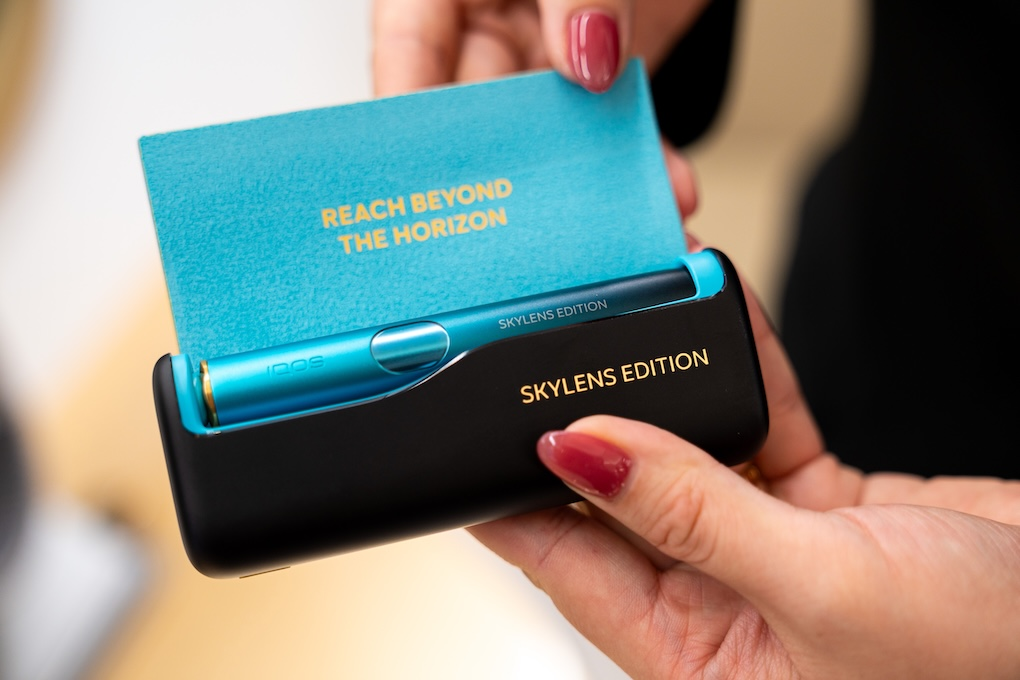
Product | PMI Launches Airport-Exclusive IQOS Skylens Limited Edition, Expanding From Japan’s Narita to Travel Retail Markets in 13 Countries Summary
Philip Morris International (PMI) has introduced the airport-exclusive limited-edition IQOS ILUMA i PRIME Skylens, the company’s first device created specifically for airport travel retail. Inspired by the world of flight and finished in metallic blue, Skylens debuted at Narita International Airport in Japan before expanding into selected airport duty-free and travel-retail channels across 13 countries in Europe, Asia, the Middle East and Africa. The product retains the existing IQOS ILUMA i PRIME platform, with differentiation centered on airport exclusivity, design and travel-retail execution rather than a new heating architecture.
PMI
Aug.19
Product | JNR Launches Shisha Hookah 70K E-Hookah With 60ml E-Liquid and 0.6% Nicotine
JNR has introduced the Shisha Hookah 70K, a high-capacity rechargeable disposable vape designed around a hookah-inspired experience. The device comes prefilled with 60ml of e-liquid at 6mg/ml (0.6%) nicotine strength, alongside a 1,000mAh rechargeable battery and a 0.38Ω single mesh coil. It also features adjustable airflow and battery and e-liquid level displays. JNR claims the device can deliver up to 70,000 puffs and offers more than 20 flavors. Retail listings for the product have appeared in markets including Tunisia.
Market
Aug.24 by 2Firsts Perspectives
U.S. Military Could Test Nicotine Pouches and Vapes for Smoking Cessation as Washington Examiner Cites ZYN and Potential $4 Billion Reduction in Related Defense Costs
The House-passed FY2027 National Defense Authorization Act includes a provision authorizing the defense secretary to conduct a one-year smoking-cessation pilot for active-duty service members. Section 707 lists counseling, nicotine gum and patches alongside what the bill calls "electric nicotine delivery systems," nicotine pouches and heat-not-burn products. A recent Washington Examiner op-ed cited ZYN as an example in arguing for the provision, but the legislation does not name any commercial brand or supplier. ZYN is made by PMI-owned Swedish Match USA, with specified products holding FDA marketing authorizations and modified risk orders.
Sep.20
Canada Health Minister Says She Is Not Considering Looser Nicotine Pouch Retail Rules as PMI-Linked Group Pushes for Wider Access
Canadian Health Minister Marjorie Michel says she is not considering loosening retail restrictions on nicotine pouches. Canada regulates pouches containing 4 mg or less of nicotine per unit as non-prescription nicotine replacement therapy and requires newer NRT formats such as pouches to be sold from behind pharmacy counters. Meanwhile, Unsmoke Canada, linked to Philip Morris International's Canadian business, is pushing to allow pouches in convenience stores and other general retail outlets. Health Canada also acknowledges continued unauthorized sales, while recent research shows rising pouch use among Canadian youth aged 16 to 19.
Sep.24
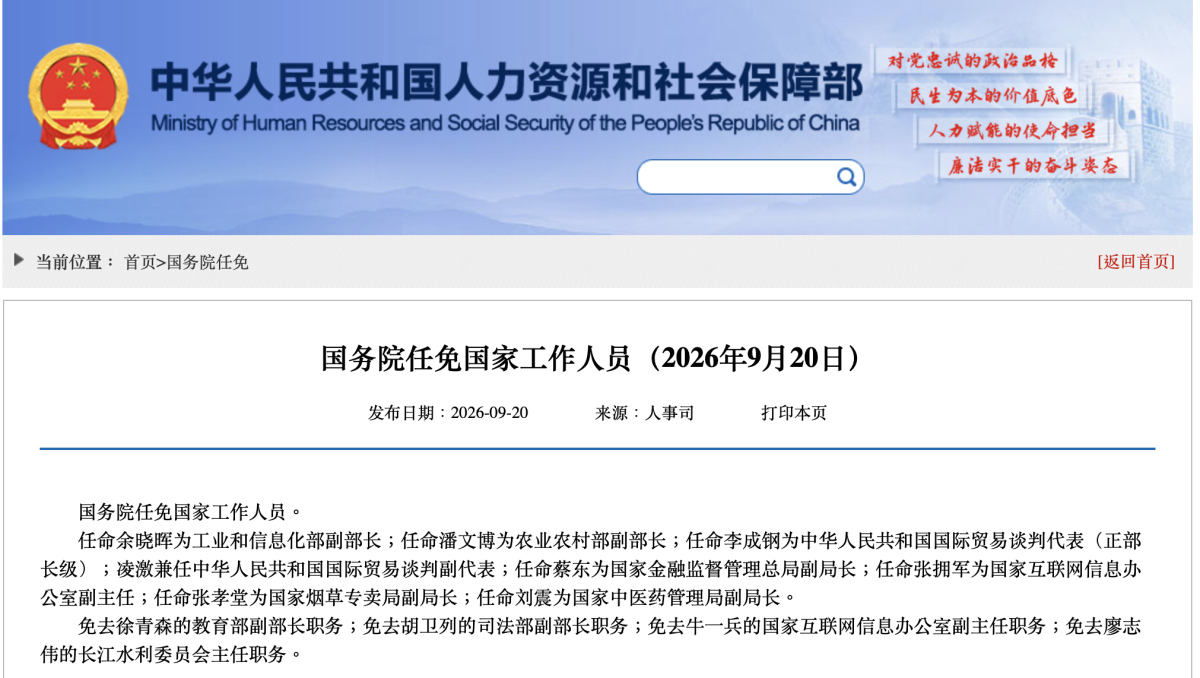
Zhang Xiaotang Appointed Deputy Director of China’s Tobacco Regulator, Adding Another Finance-Background Official to Top Leadership
China’s State Council has appointed Zhang Xiaotang as deputy director of the State Tobacco Monopoly Administration, with the regulator’s official website now listing him as a Party leadership group member and deputy director. Zhang previously led Hebei China Tobacco and earlier headed the STMA’s finance and audit department. His appointment follows the elevation earlier this year of former tax official Yao Laiying to head the STMA, adding another senior official with a strong fiscal or financial-management background to China Tobacco’s top leadership in 2026.
News
Sep.20